
If you are thinking about suicide, seek help immediately. Call +234 806 900 8876, a crisis line, or go to the nearest hospital emergency room.
Suicide is a leading cause of death.

Suicide is death caused by injuring oneself with the intent to die. A suicide attempt is when someone harms themselves with any intent to end their life, but they do not die as a result of their actions.
Many factors can increase the risk for suicide or protect against it. Suicide is connected to other forms of injury and violence. For example, people who have experienced violence, including child abuse, bullying, or sexual violence, have a higher suicide risk. Being connected to family and community support and having easy access to healthcare can decrease suicidal thoughts and behaviors.
Suicide is a serious public health problem
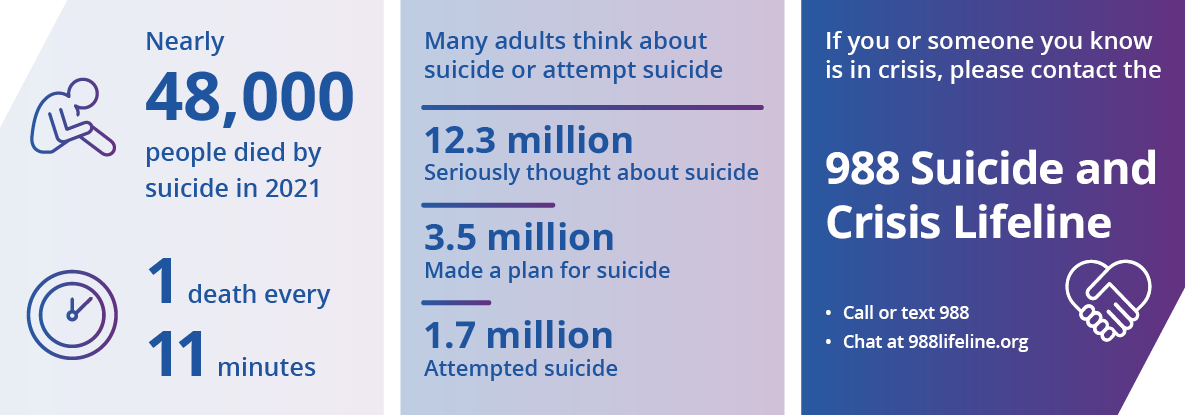
Suicide rates increased approximately 36% between 2000 and 2021. Suicide was responsible for 48,183 deaths in 2021, which is about one death every 11 minutes. The number of people who think about or attempt suicide is even higher. In 2021, an estimated 12.3 million American adults seriously thought about suicide, 3.5 million planned a suicide attempt, and 1.7 million attempted suicide.
Suicide affects people of all ages. In 2021, suicide was among the top 9 leading causes of death for people ages 10–64. Suicide was the second leading cause of death for people ages 10–14 and 20–34.
Some groups have higher suicide rates than others. Suicide rates vary by race and ethnicity, age, and other factors, such as where someone lives. By race and ethnicity, the groups with the highest rates are non-Hispanic American Indian / Alaska Native people, followed by non-Hispanic White people. Other Americans with higher-than-average rates of suicide are veterans, people who live in rural areas, and workers in certain industries and occupations such as mining and construction. Young people who identify as lesbian, gay, or bisexual have a higher prevalence of suicidal thoughts and behavior compared with peers who identify as heterosexual.
Suicide has a far-reaching impact
Suicide and suicide attempts cause serious emotional, physical, and economic impacts. People who attempt suicide and survive may experience serious injuries that can have long-term effects on their health. They may also experience depression and other mental health concerns.
Suicide and suicide attempts affect the health and well-being of friends, loved ones, co-workers, and the community. When people die by suicide, their surviving family and friends may experience prolonged grief, shock, anger, guilt, symptoms of depression or anxiety, and even thoughts of suicide themselves.
The financial toll of suicide on society is also costly. In 2020, suicide and nonfatal self-harm cost the nation over $500 billion in medical costs, work-loss costs, value of statistical life, and quality-of-life costs.
Suicidal behavior also has a far-reaching impact:
There were 46,412 suicides among adults in 2021. But suicides are just the tip of the iceberg. For every suicide death, there were about:
- 3 hospitalizations for self-harm
- 8 emergency department visits related to suicide
- 38 self-reported suicide attempts in the past year
- 265 people who seriously considered suicide in the past year
Suicide prevention
Suicide is preventable and everyone has a role to play to save lives and create healthy and strong individuals, families, and communities. Suicide prevention requires a comprehensive public health approach. The CDC developed the Suicide Prevention Resource for Action, which provides information on the best available evidence for suicide prevention. States and communities can use it to help make decisions about suicide prevention activities. Strategies range from those designed to support people at increased risk to a focus on the whole population, regardless of risk.
Strengthen economic supports
- Strengthen household financial security
- Stabilise housing
Create protective environments
- Reduce access to lethal means among persons at risk of suicide
- Create healthy organisational policies and culture
- Reduce substance use through community-based policies and practices

Improve access and delivery of suicide care
- Cover mental health conditions in health insurance policies
- Increase provider availability in underserved areas
- Provide rapid and remote access to help
- Create safer suicide care through systems change

Promote healthy connections
- Promote healthy peer norms
- Engage community members in shared activities

Teach coping and problem-solving skills
- Support social-emotional learning programmes
- Teach parenting skills to improve family relationships
- Support resilience through education programmes

Identify and support people at risk
- Train gatekeepers
- Respond to crises
- Plan for safety and follow-up after an attempt
- Provide therapeutic approaches

Lessen harms and prevent future risk
- Intervene after a suicide (postvention)
- Report and message about suicide safely